Creating a productive and comfortable home office environment is key to working efficiently and maintaining a healthy work-life balance. Whether you’re new to remote work or looking to improve your current setup, these tips will help you design a space that inspires focus and well-being.
Choose the Right Location
Selecting the perfect spot for your home office sets the foundation for productivity. Ideally, find a quiet area with minimal distractions and enough room for your desk, chair, and any necessary equipment.
– Avoid high-traffic or noisy areas.
– Consider a space with natural light.
– If space is limited, use room dividers or screens to create separation.
Invest in Ergonomic Furniture
Comfort during work hours prevents fatigue and physical strain. Ergonomic furniture supports your posture and reduces the risk of discomfort.
– Desk: Choose a desk with sufficient surface area and adjustable height if possible.
– Chair: Invest in an ergonomic chair that offers lumbar support and adjustable height.
– Accessories: Use a keyboard tray or ergonomic mouse to reduce wrist strain.
Optimize Lighting
Good lighting reduces eye strain and improves mood and alertness.
– Maximize natural light by positioning your desk near windows.
– Use adjustable desk lamps with warm or neutral light tones.
– Avoid glare on your screen by adjusting blinds or monitors.
Organize Your Workspace
A clean and organized workspace minimizes distractions and boosts efficiency.
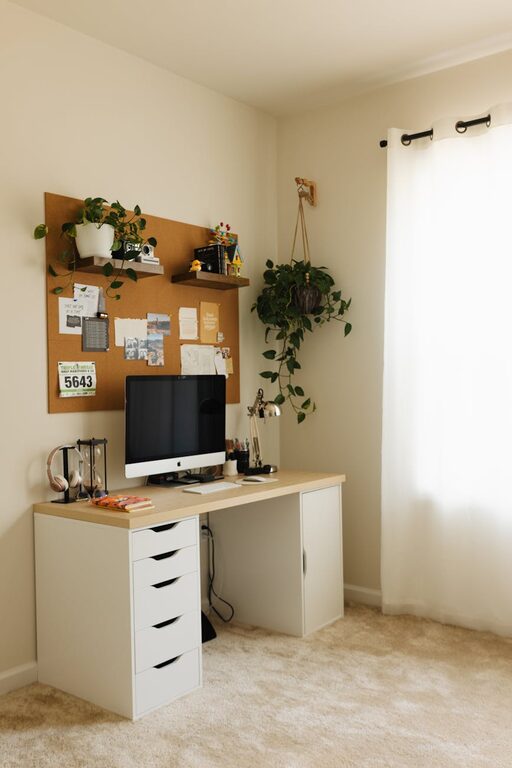
– Use shelves, drawers, or storage boxes to keep items tidy.
– Keep frequently used items within arm’s reach.
– Implement cable management solutions to reduce clutter.
Personalize Your Environment
Adding personal touches can increase comfort and motivation.
– Display inspiring artwork or plants.
– Use colours that promote focus, such as blues or greens.
– Incorporate calming scents like lavender with essential oil diffusers.
Minimize Distractions
Focusing on tasks is easier when interruptions are limited.
– Set office hours and communicate them to family or housemates.
– Use noise-cancelling headphones if needed.
– Keep smartphone notifications off or use focus modes while working.
Maintain Good Air Quality and Temperature
A comfortable climate improves concentration and well-being.
– Ensure proper ventilation by opening windows or using air purifiers.
– Use fans or heaters to regulate temperature.
– Keep the room clean from dust and allergens.
Use Technology Wisely
The right tech tools can enhance productivity without causing frustration.
– Choose monitors that reduce eye strain.
– Use productivity apps to track tasks and time.
– Ensure a stable internet connection and invest in good-quality headsets.
Take Regular Breaks
Scheduling pauses throughout your workday helps maintain energy and focus.
– Follow the Pomodoro Technique: work 25 minutes, break 5 minutes.
– Stand up, stretch, or take short walks.
– Use breaks to hydrate and rest your eyes.
Maintain a Healthy Work-Life Balance
Separating work and home routines prevents burnout.
– End your workday by tidying your workspace.
– Avoid working in bed or on the couch to keep boundaries clear.
– Create a routine that signals the start and end of your workday.
Conclusion
Designing a home office that is both productive and comfortable takes thoughtful planning but pays off with better focus, health, and satisfaction. Remember to tailor your workspace to your personal needs and keep adjusting it as you go along. With the right setup, your home office can be a place where you enjoy working every day.